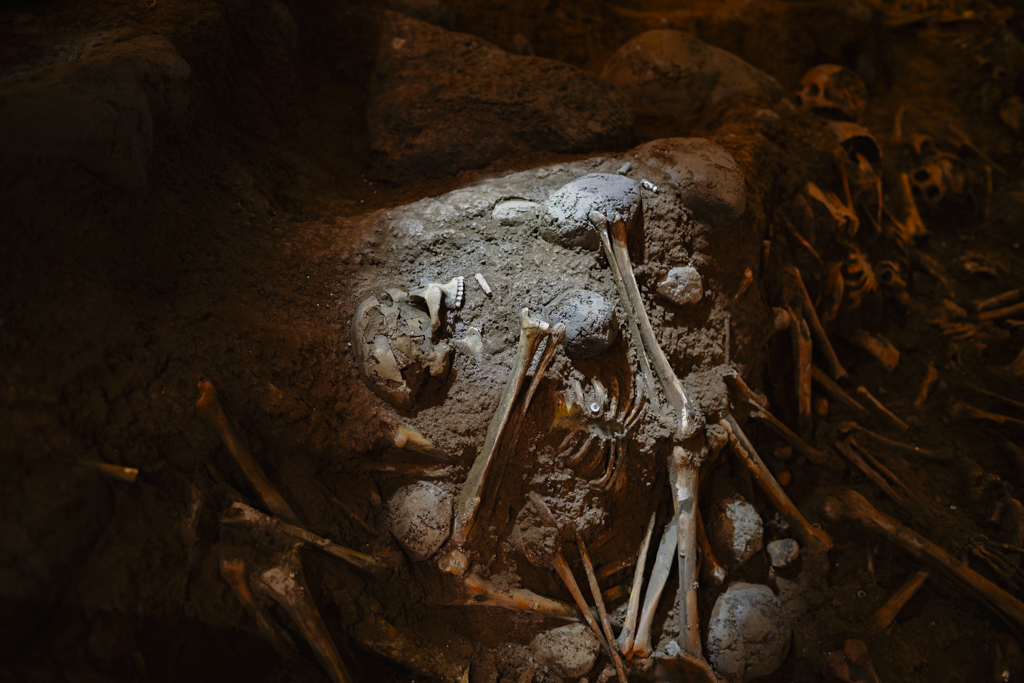
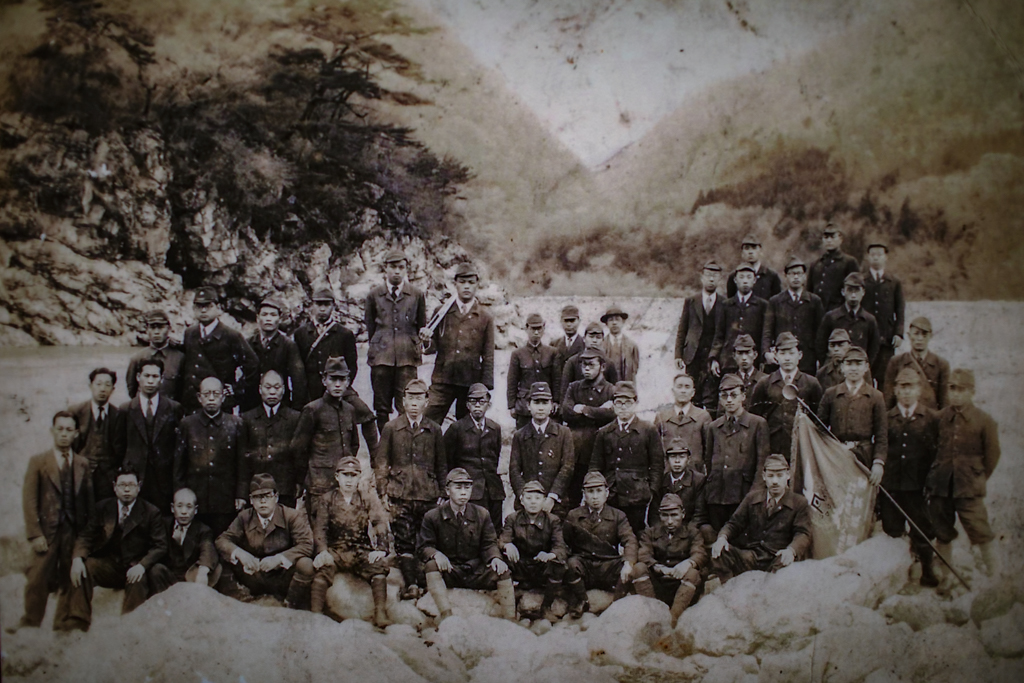
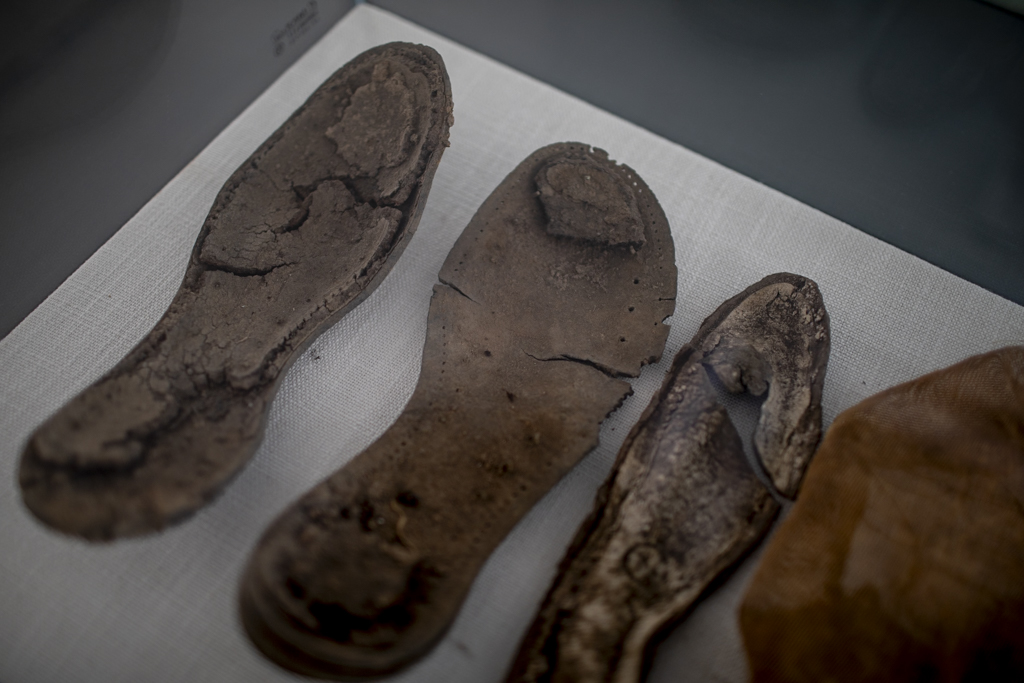
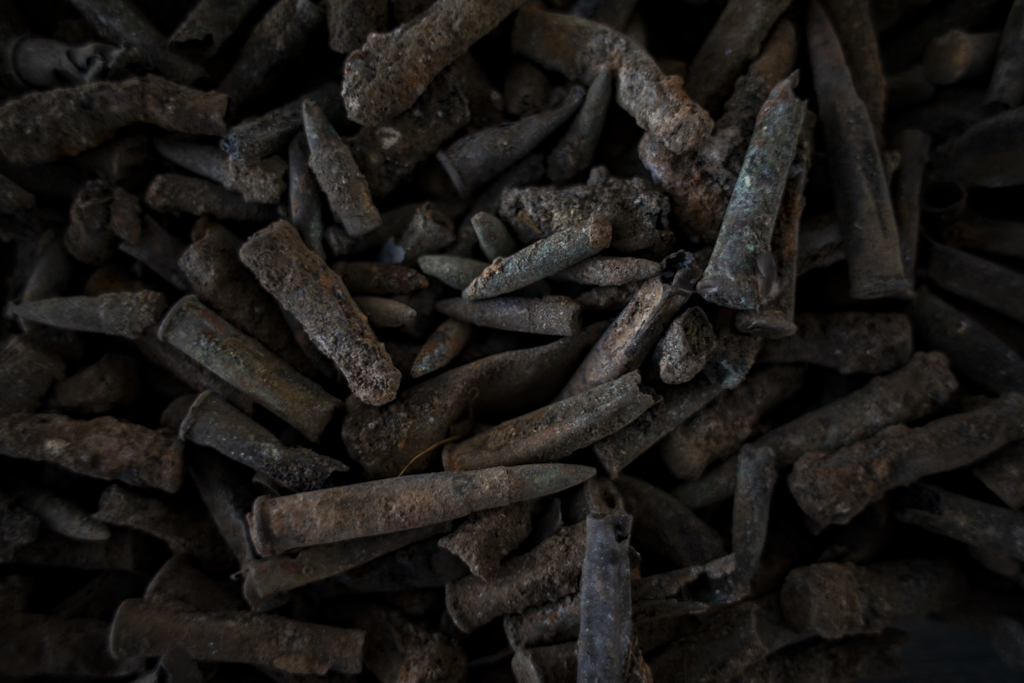
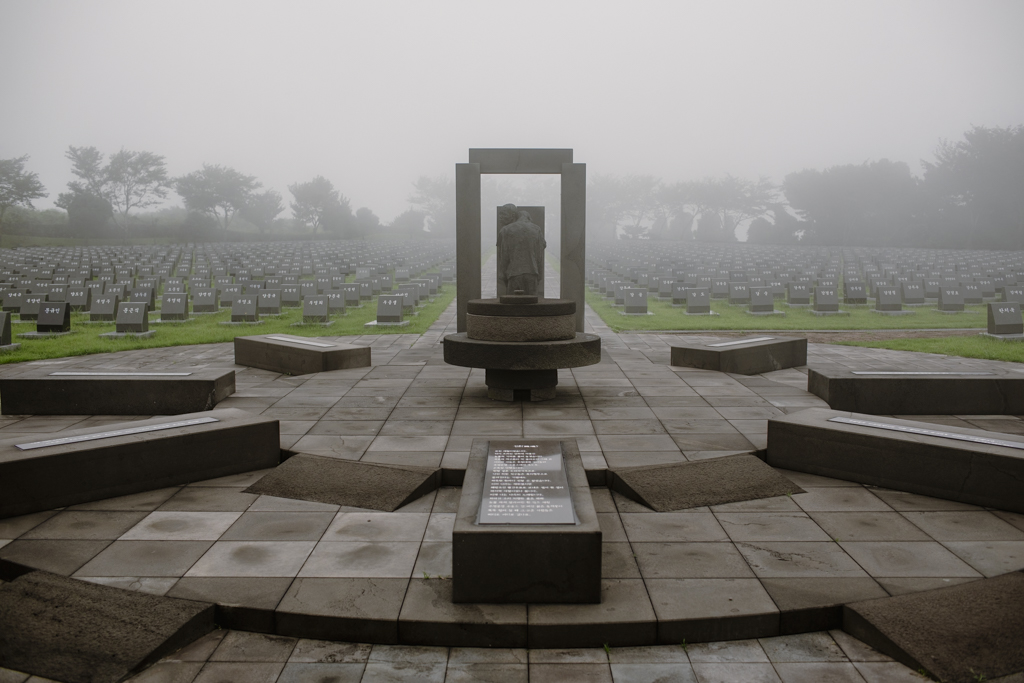
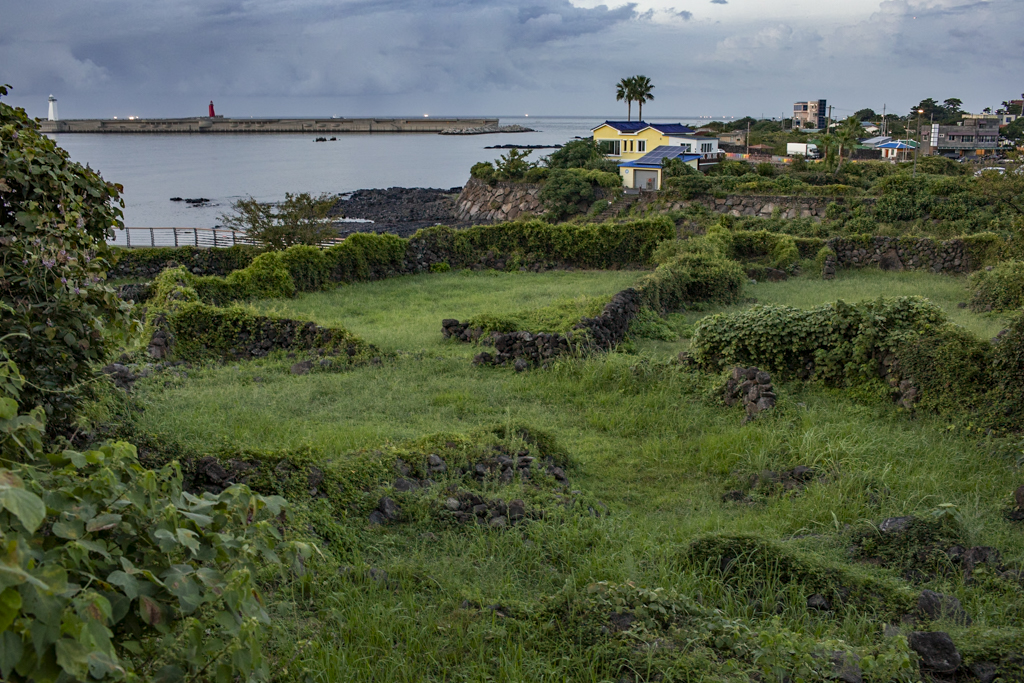
Between 1947 and 1954, Jeju Island, South Korea, was the site of widespread civilian repression following protests, an armed uprising, and subsequent counterinsurgency operations by state forces. The period, known as the Jeju 4·3 incident, resulted in mass killings, detention, and displacement, along with the destruction of entire villages. South Korea’s official truth-finding investigation has reported approximately 14,000–15,000 confirmed victims, and has estimated that about 25,000–30,000 people were killed overall during the events—more than one-tenth of Jeju’s population at the time.
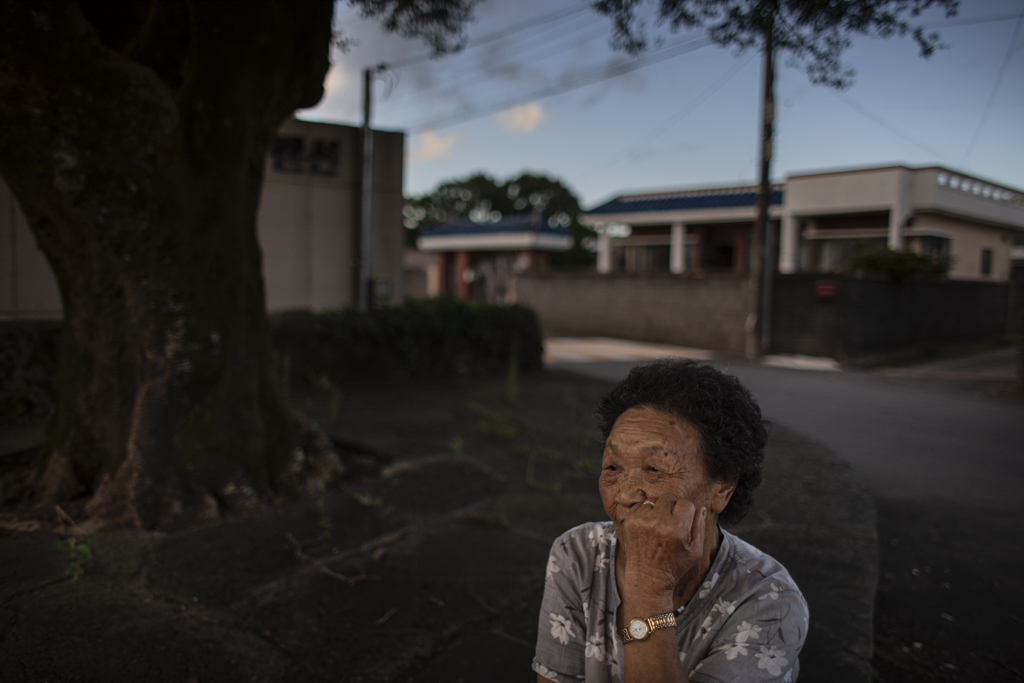
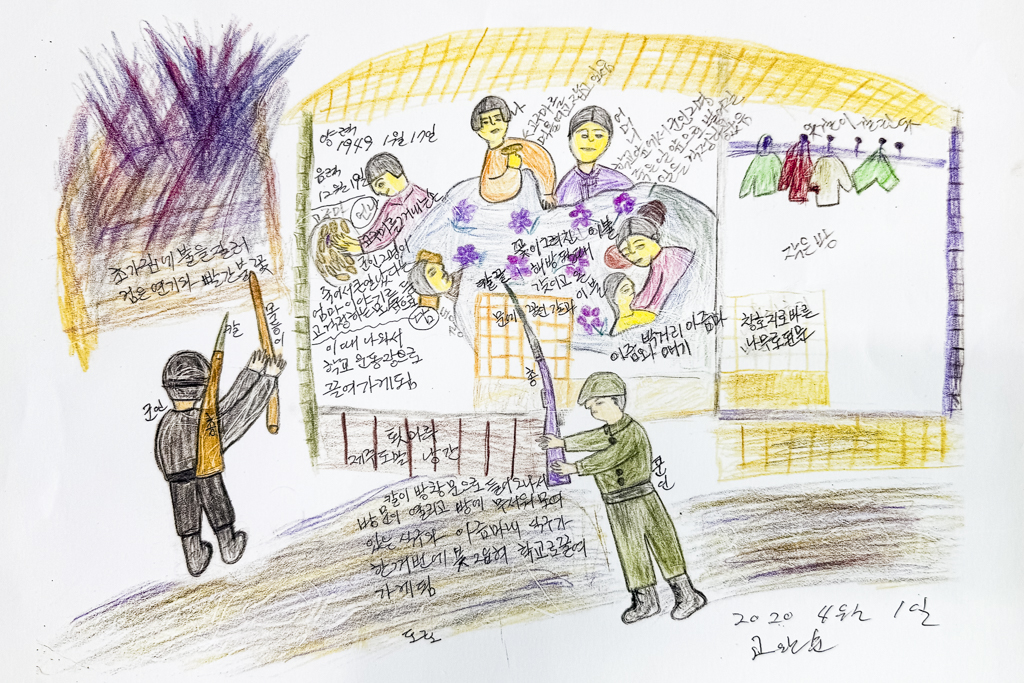
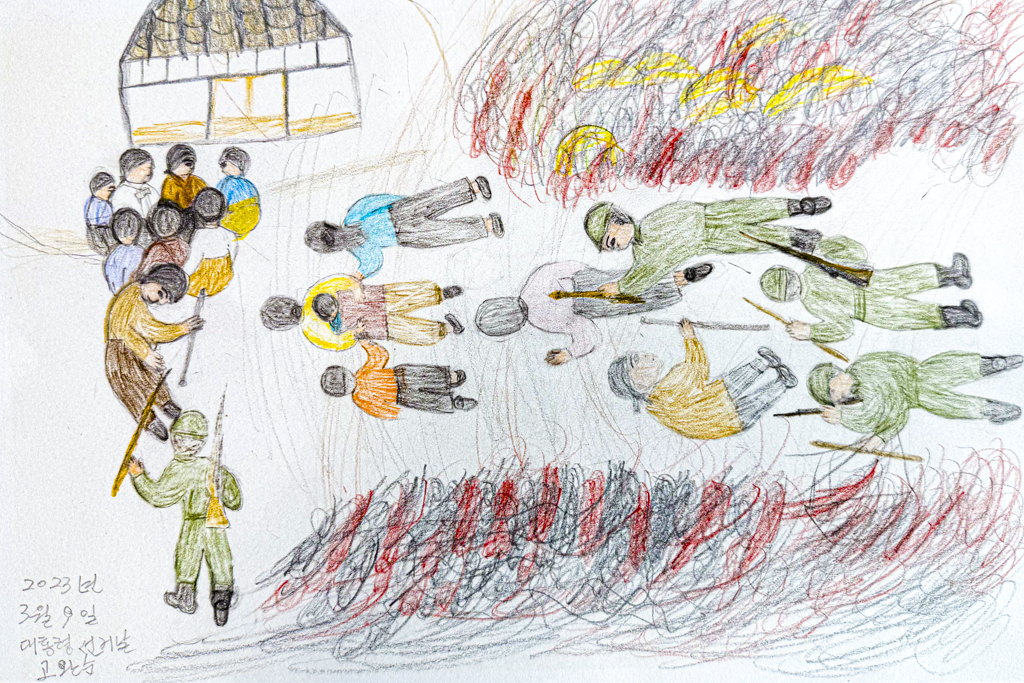
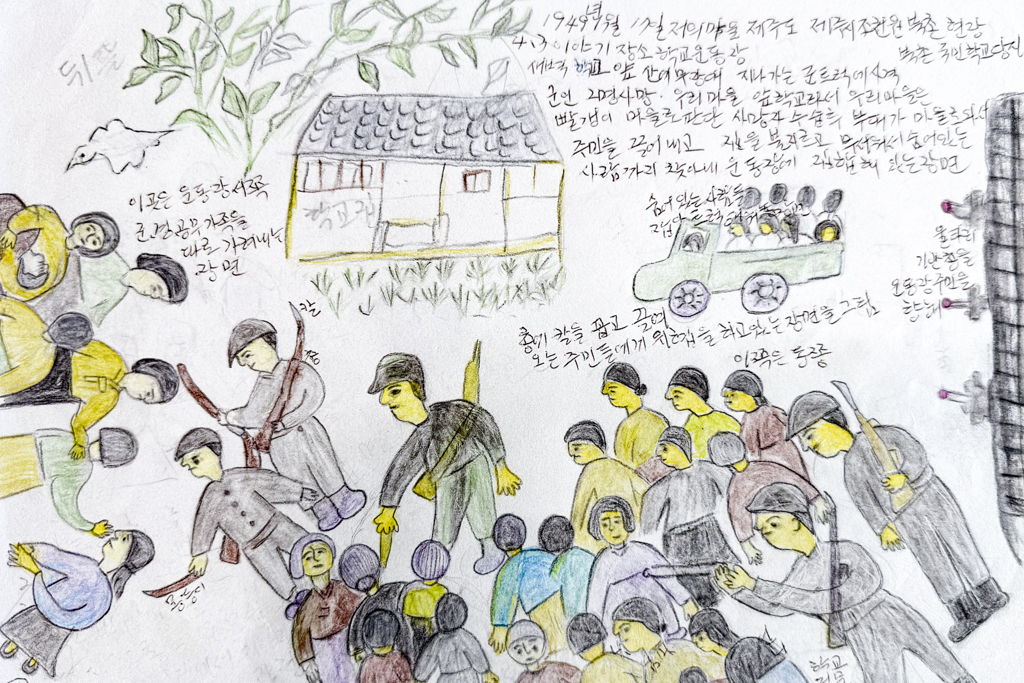
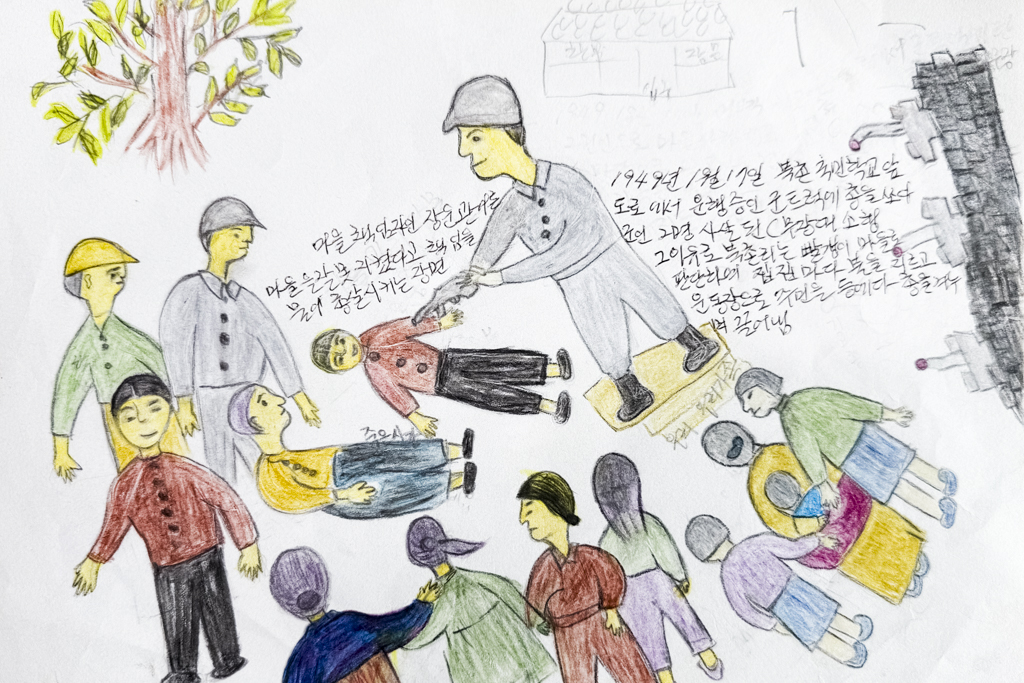
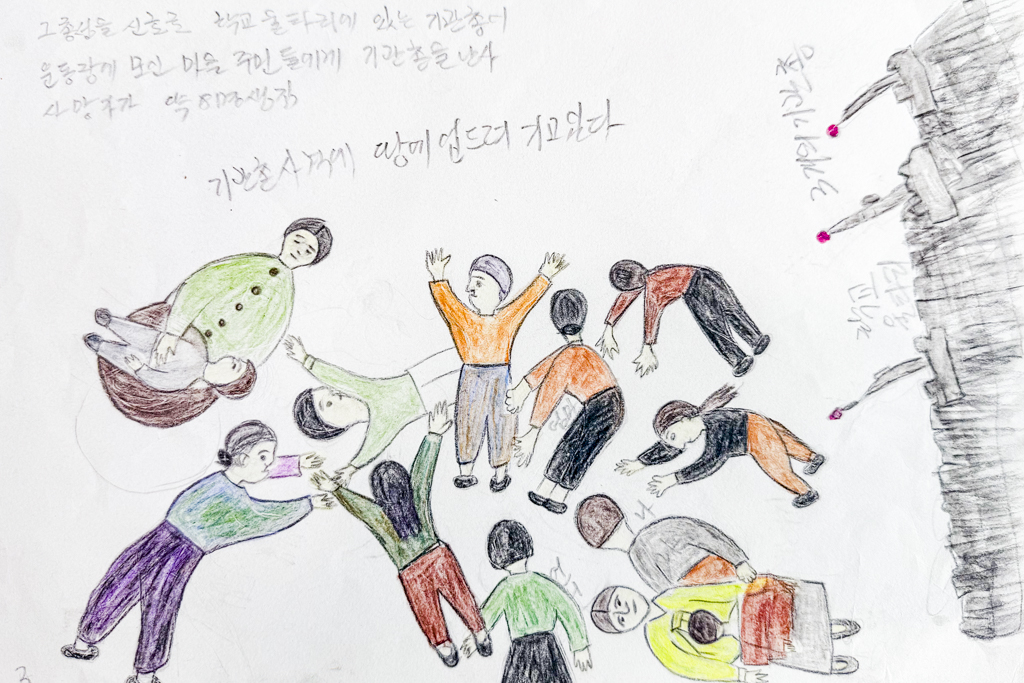
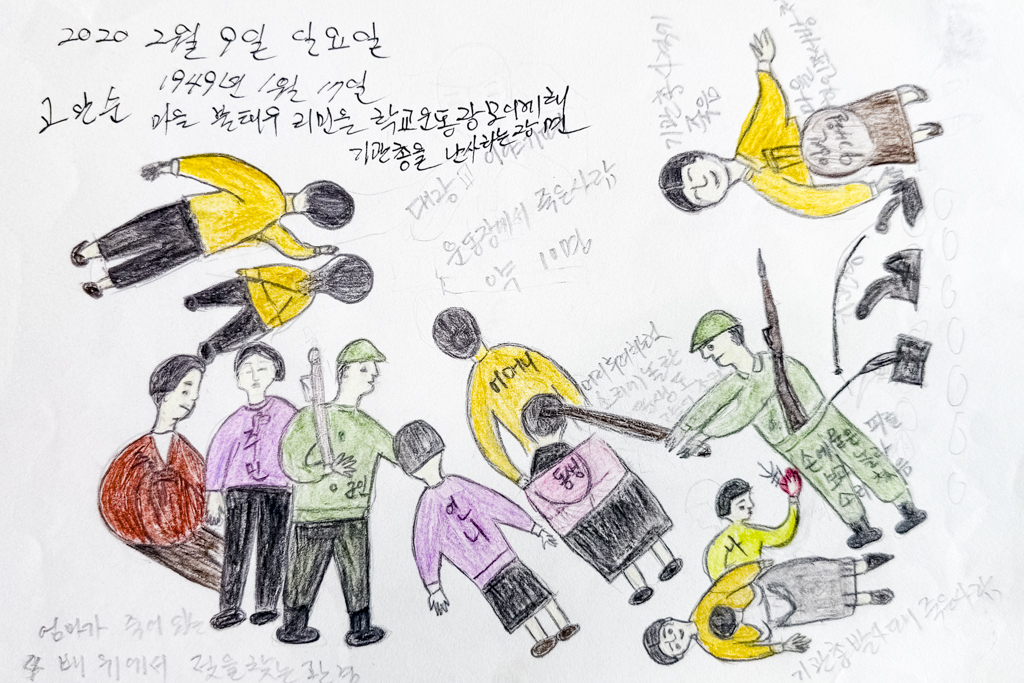
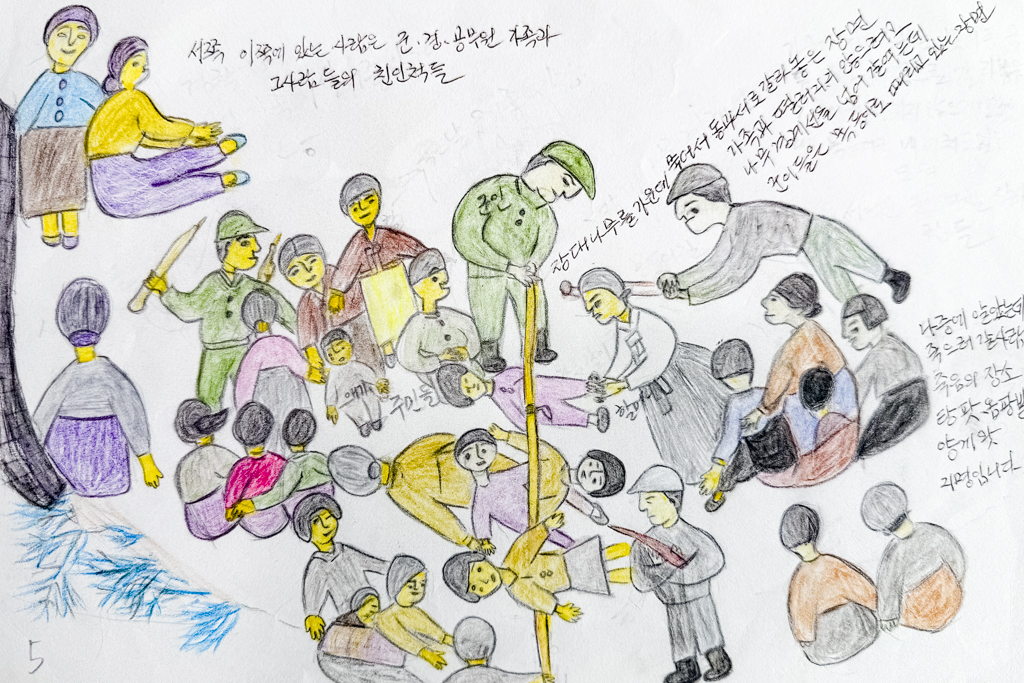
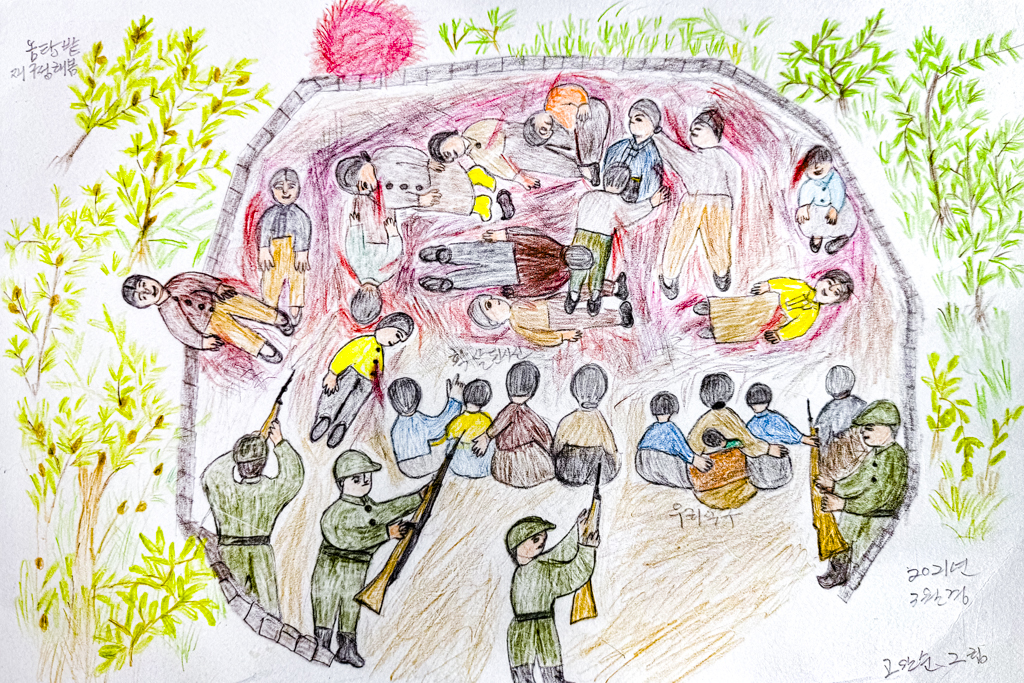
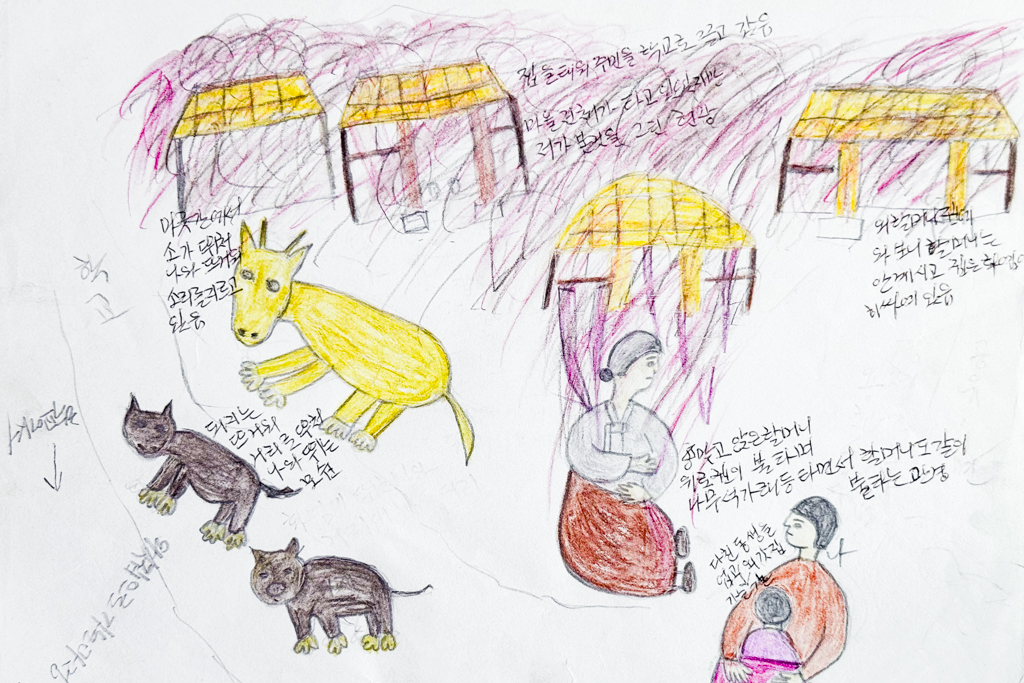
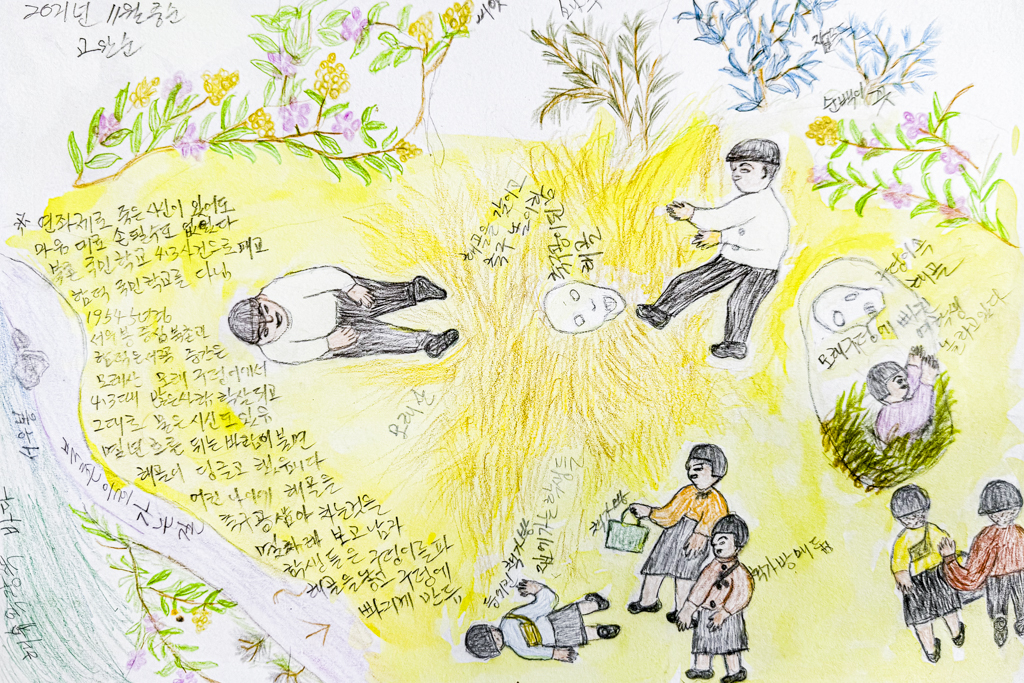
Ko Wan-soon, born in 1939 in Bukchon Village, Jeju, was nine years old when the violence unfolded. She survived the Bukchon massacre, one of the most severe episodes of the Jeju 4·3. Historical accounts and memorial records report that approximately 398 villagers were killed over two days during the violence in Bukchon. Ko lost six family members, including her mother, younger brother and several relatives on her mother’s side, such as her maternal uncle and aunt. Like many survivors, Ko carried these memories quietly for decades, in a society where speaking openly about 4·3 was prohibited. In later life, she began sharing her testimony through interviews, public commemorations, and educational programs supported by the Jeju 4·3 Peace Foundation. In 2020, Ko Wan-soon began translating her memories into drawings. Using colored pencils and handwritten notes in Korean, she reconstructed scenes from her childhood: daily life before the violence, the arrival of armed forces, forced assemblies of civilians, separation of families, killings, and the aftermath of survival. The drawings include dates and brief descriptions, linking personal memory to historical time and place.